
ONGC retained the top position on the coveted list of 10 most profit-making PSUs, while AirIndia was the biggest loss-making state firm during 2010-11.

IndiGo operator InterGlobe Aviation had a mildly encouraging third quarter in financial year 2026 (Q3FY26).

Aviation Turbine Fuel (ATF) prices have more than doubled to a record high, impacting airlines and consumers, while commercial LPG rates also see a significant increase.

Changing tracks helps. But, not taking the beaten path isn't always helpful. This is the story of two of India's biggest privatisations - Air India and Bharat Petroleum (BPCL). Nearly two decades after the last privatisation, a landmark divestment concluded this year when the loss-making national carrier Air India was sold to the Tatas.

Air India has very often been slammed for living off taxpayers' money - an impression that was patently wrong till a couple of months ago when the first tranche of Rs 800 crore was given to the airline as additional equity by the government
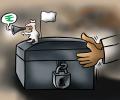
The government is selling its entire 100 per cent stake in Air India but wants effective control to stay with Indian nationals.

The three oil PSUs have told Air India that if it did not make the monthly lump sum payment, they will stop fuel supply from October 11 at six major domestic airports.

As the Tata group inches closer to taking over Air India in January 2022, the $242-billion conglomerate will also inherit a stake in Kerala's Cochin airport. The Tatas would become the only airline to have an operational stake in a major Indian airport. The airport is a strategic hub connecting India to Middle East nations - home to the largest share of Indian migrant workers. In addition to Air India and Air India Express, private carrier Indigo also uses Cochin to ferry the lucrative 'Malayali Gulf traffic' to multiple locations like Jeddah, Riyadh, Sharjah, Dubai, Abu Dhabi, Doha, Kuwait and Bahrain, among others. According to regulatory filings, Air India has a three per cent stake in Cochin International Airport.

'If you are selling family silver, and if you are not getting the right value, then what is the point?'
But sources said the airline had already executed a sale and leaseback agreement for old aircraft, adding, "Air India is also looking at similar agreements for brand new aircraft."

The MoU is a separate agreement entered into with the ministry that is more broad-based.

Where was the Board when a predictable regulatory change brought the country's largest airline to its knees? asks Dr Sudhir Bisht.

'National assets, created over the years through tax-payers's money, should not be handed over to business houses at throwaway prices.'

A mutually beneficial relationship between the airline and the govt is the reason for its continued funding.
IOC, BPCL and HPCL on Thursday afternoon stopped ATF supplies to Air India at six airports - Kochi, Pune, Patna, Ranchi, Vizag and Mohali - over payment defaults. AI flights from these places were tanking up from other airports.

Stocks of public sector undertakings (PSUs) have been on fire in the past year as investors cheered an improvement in key operating metrics and embraced counters of these state-owned enterprises, analysts suggest. The S&P BSE PSU Index has gained over 90 per cent in the past year, rising much higher than the S&P BSE Sensex, which has rose nearly 19 per cent during this period, according to ACE Equity data. The BSE PSU Index, reports show, has delivered a compound annual growth rate (CAGR) of 28 per cent (including dividends reinvestments) over five years and risen by almost 60 per cent in the past year.

The government on Monday budgeted Rs 1.75 lakh crore from stake sale in public sector companies and financial institutions, including 2 PSU banks and one general insurance company, in the next fiscal year beginning April 1. The amount is lower than the record Rs 2.10 lakh crore which was budgeted to be raised from CPSE disinvestment in the current fiscal year. However, the COVID-19 pandemic impacted the government's CPSE stake sale programme, and the target has been lowered to Rs 32,000 crore in the Revised Estimates.
The share of public sector undertakings (PSUs) in the total market capitalisation of listed companies--at an all-time low of 10 per cent currently --- may get a leg-up from the government's divestment push. Recently the government announced the successful sale of national carrier Air India to Tata Sons, India's first privatisation of a PSU since 2002-03. The transaction is expected to be completed by December.

'Inter-ministerial coordination, information on the proposed PSUs, and due diligence are taking longer than expected to conclude the process.'

India needs another shot of difficult reform, of the kind only possible at gunpoint. Mr Trump holds that gun to our heads now. A drastic reduction in tariff protection, other elements of sarkari wet-nursing will force entrepreneurial India to become competitive again, argues Shekhar Gupta.

The divestment process, however, will not be an easy affair as there are multiple stakeholders, including the employee unions, whose concerns will have to be addressed.

In the year to date, 61 PSUs have lost an average of 22 per cent, with five companies losing more than half their share value. The BSE PSU index is down 10.6 per cent.

rediffGURU Rohit Gupta, co-founder and COO of College Vidya, provides a list of competitive exams that can help you land a job in the public sector.
With general elections on the horizon, the government's privatisation bandwagon has almost but stalled as a government wary of being accused of selling family silver opts for minority stake sales on stock exchanges over outright privatisation. The result -- the divestment target for current fiscal year is again likely to be missed. Big ticket privatisation plans such as that of Bharat Petroleum Corporation Ltd (BPCL), Shipping Corporation of India (SCI) and CONCOR are already on the backburner and analysts feel meaningful privatisation can happen only after April/May general elections.

Does the Union government or the RBI see itself as Krishna beheading Shishupal and what will constitute the 101st or indeed the past many sins for which a Sudarshan Chakra will have to be used? More importantly, what are those sins?
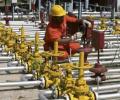
Oil explorer ONGC again emerged as the highest profit-making PSU of the country during 2012-13 while telecom major BSNL turned out to be the biggest loss-making enterprise, says the Economic Survey.

The government will press ahead with the sale of public sector companies that have been approved by the Cabinet, Finance Minister Nirmala Sitharaman said on Thursday. Highlighting that FDI flow into India is much higher compared to other emerging economies, she said India's strong macroeconomic fundamentals, ability to do reforms and a stable government help attract long-term foreign funds into Indian businesses.

Why the recent strike could see the carrier go Air India's way.
Divestment in major state-run firms is set to perk up the IPO space, with about six PSUs including Air India, BSNL, Oil India and NHPC, gearing up to sell equity sale in the primary market.

The two anti-submarine warfare shallow watercraft built by Garden Reach Shipbuilders and Engineers Limited were launched by Neeta Chaudhari, wife of Chief of Air Staff of Indian Air Force, Air Chief Marshal V R Chaudhari.

Mallya claims private airlines were discriminated against by the Indian government, which bailed out state-owned Air India but did not assist his own Kingfisher Airlines and now Jet Airways.

Air India is understood be in negotiations with state-run banks to avail working capital loans at low interests.
Confronted with competition, state-run logistics companies are opting for joint ventures among themselves and with the private sector.

The government has tweaked the income tax laws to make it easier for the new owners of loss-making public sector undertakings (PSUs) to carry forward the accumulated losses and set them off against future profits. This will result in significant tax savings for the new owners if they are able to turnaround operations of the ailing PSU within a few years. This will, in turn, boost the post-tax earnings and returns for the new owners.
It was touted as a game changer but big-ticket privatisation has been a mixed bag as the government faces unanticipated challenges of lukewarm investor response, employee union agitation and legal hurdles. Prime Minister Narendra Modi's often-repeated statement 'the government has no business to be in business' guided the drawing up of an ambitious privatisation pipeline. While Air India sale succeeded, Bharat Petroleum Corporation Ltd (BPCL) divestment failed.
Take the Rediff Biz Quiz and find out how much you know about India and its public sector companies.

The rally followed the govt's plan to bolster state-owned lenders.
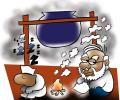
Modi government's story of five years with regard to equity allocation for PSUs shows that it may have allowed a large part of its resources to be wasted. This is also a worrying reflection of the government's inability to take hard decisions - whether they pertain to privatisation or forcing weak public-sector banks to wind down their operations, says A K Bhattacharya.
Kingfisher Airlines Executive Vice-President Hitesh Patel said Kingfisher was interested in flying Gulf and south-eastern destinations, if the government permitted.
Out of nearly 30 public sector undertakings and assets under 'strategic sale' plan, only the ONGC-HPCL plan has been completed
